Where to Start With a Cut Flower Garden
Starting a cut flower garden can be overwhelming, but it doesn’t have to be. Starting is the biggest step and every year you will get a little better. Gardening is an action that is so worth taking. At the end of this post I’ll give you a simple checklist to take with you to give you the confidence to start your cut flower garden this year.
1. Pick Your Garden Location
- Sunlight: Most cut flowers need at least 6 hours of full sun each day, so choose a sunny spot in your yard.
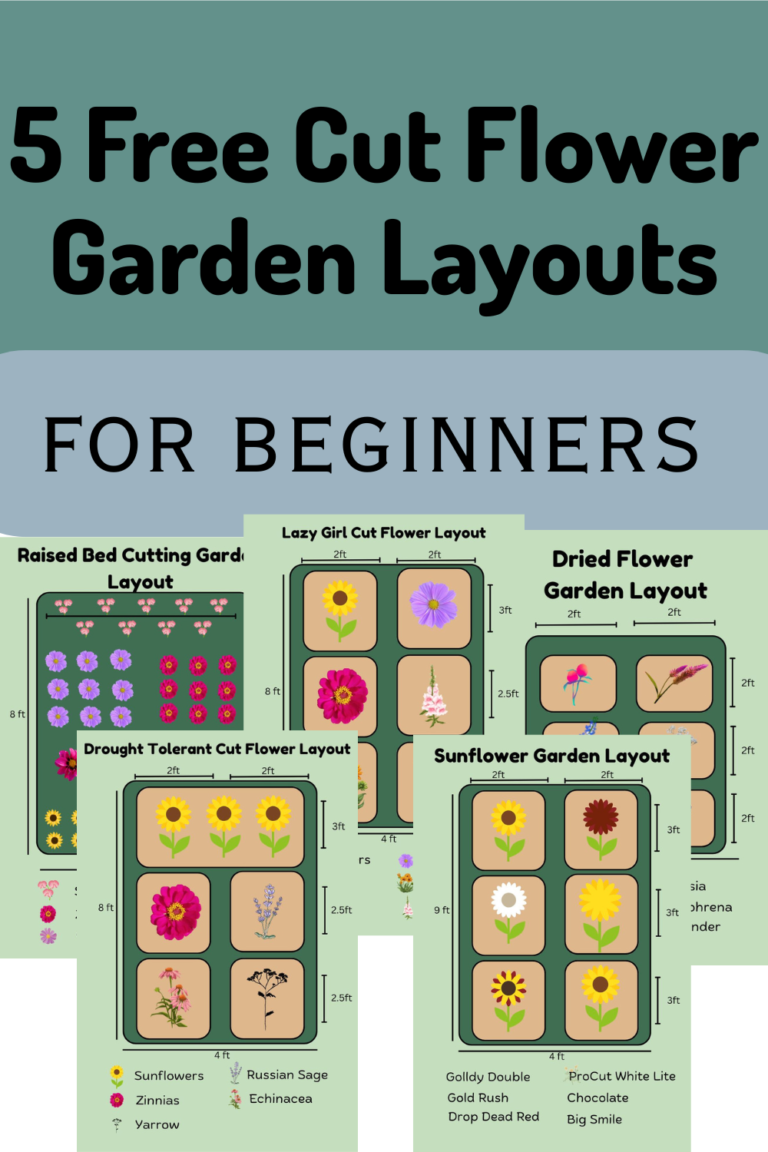
- Space: Make sure there’s enough space for your flowers to grow and for you to move around easily when cutting. A plot of 4×8 feet is a good starting size for beginners. You can also start even smaller with a pot. I have 3 cut flower garden layout ideas HERE.
- Location: Decide if you are going to grow in a pot, raised bed, or ground. Pots are great to start with, raised beds are great if you have poor soil and don’t have to be on your hands and knees. While in ground gardens are the most cost efficient.
2. Choose Easy-to-Grow Flowers
Starting with flowers that are easy to grow is your best bet for success. I have a whole detailed post about the top flowers to start HERE, but the simple list is this
- Marigolds: Hardy and resistant to pests, marigolds thrive in full sun and need minimal watering once established. They also are great at deterring pests from attacking your other plants.
- Sunflowers: They grow easily from seeds and are great to plant with kids. Sunflowers grow so fast! I like to get bunching sunflowers so I get more than one bloom. If you want more ideas on the best variety to grow I have a whole post just on growing sunflowers HERE.
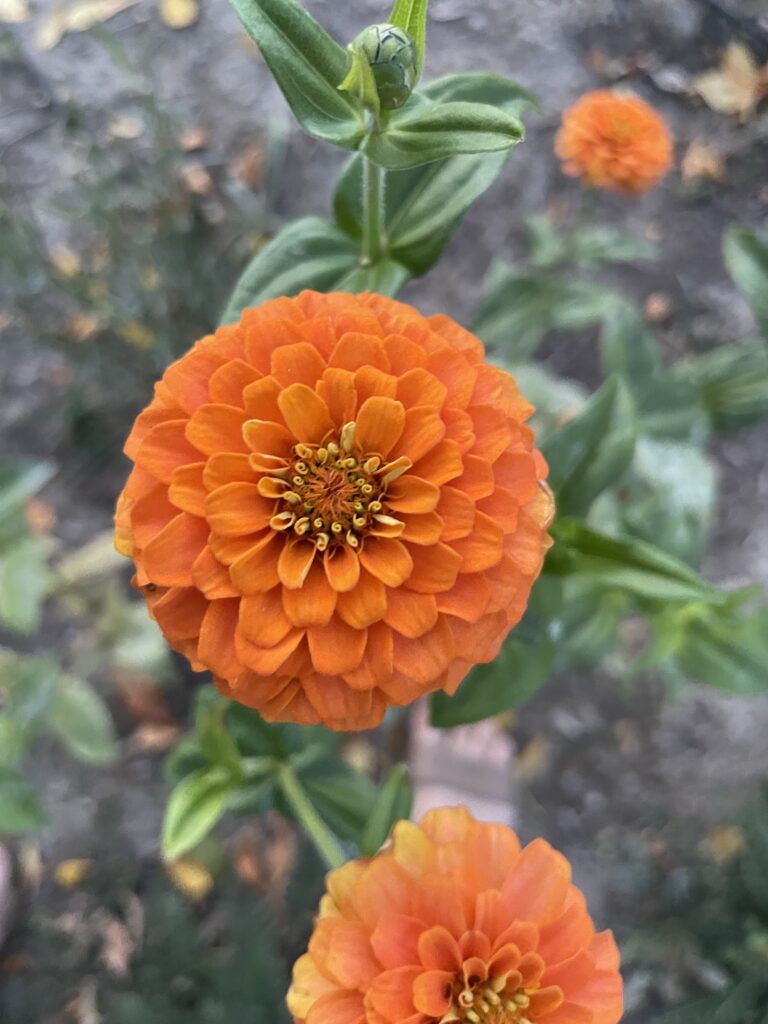
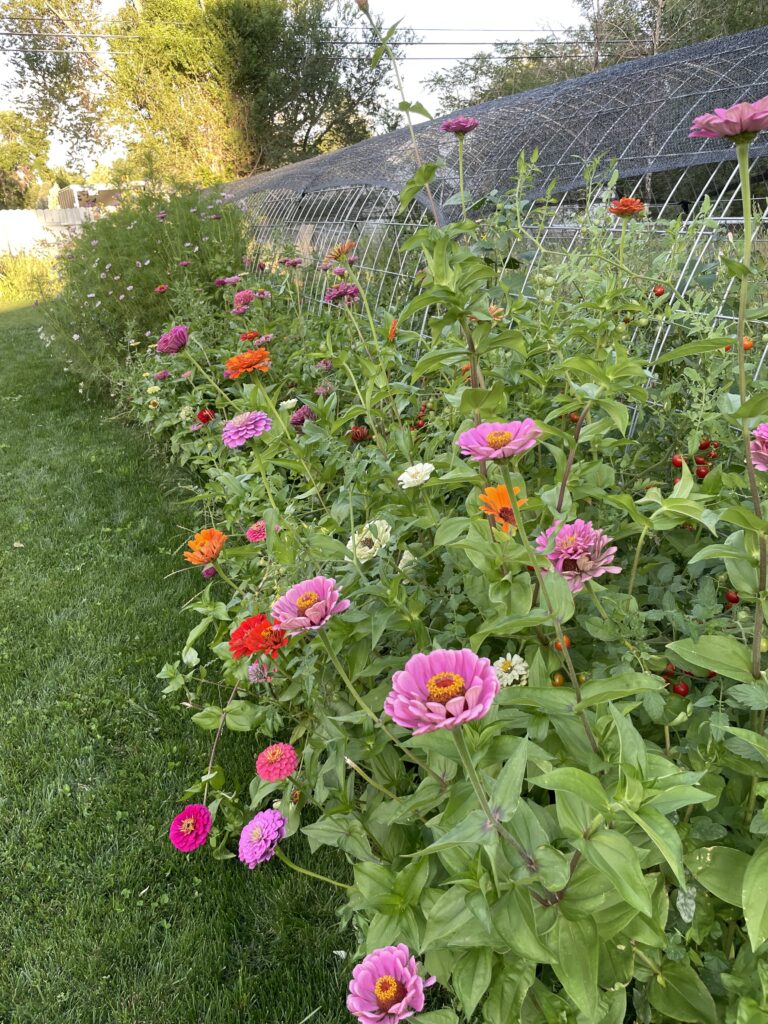
- Zinnias: These flowers are drought-tolerant, attract bees, monarch butterflies and hummingbirds, and thrive in full sun. I also have a whole post on growing zinnias HERE.
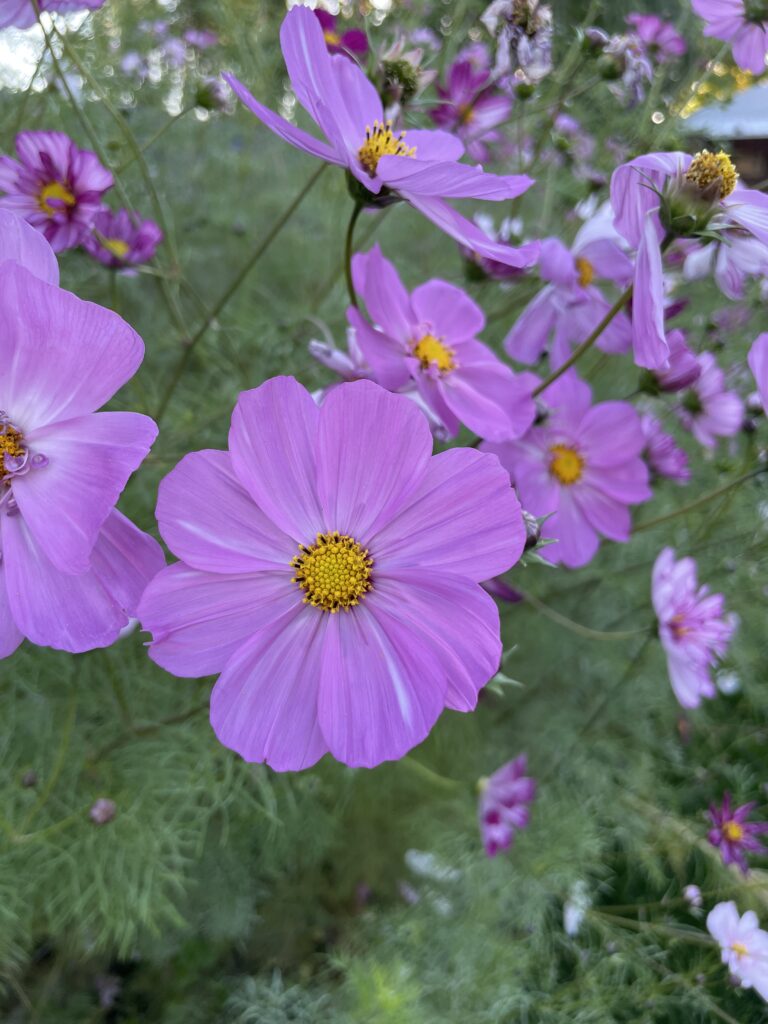
- Comos: Comos are so whimsical and have dainty flowers. I love cutting and bringing these flowers inside. These flowers have spread in my garden and are growing like weeds, but to be honest I don’t mind at all.
- Calendula: Not only an easy plant to grow from seeds, calendula has medicinal properties and can be used to make tinctures and salves.
3. Prepare the Soil
Healthy soil is key to beautiful flowers. Don’t overthink this step. Break up your soil and add an inch of compost/ aged manure and work it into the soil.
- Clear the Area: Remove any weeds, rocks, or debris from the area where you want to plant.
- Amend the Soil: Mix in an inch of compost or organic matter to enrich the soil. You can also do a soil test if you are not having success with your plants.
- Set up your irrigation: Decide how you are going to water your plant and make any needed irrigation systems. Some ideas are drip, over head, using a hose, or watering by hand. Whatever you decide, make sure it is realistic to your lifestyle and you will be able to maintain the plant life.
4. Planting Your Flowers
- Seeds Vs Transplants: You can start many flowers from seed or buy young plants from a nursery. Transplants will give you a harvest faster, but it is more expensive and you will have less options on varieties. Seeds you will have hundreds of options and it really isn’t hard to grow them from seeds.
- Direct Sowing: All of the flowers I suggested above you can plant from seeds or plant starts. The key is to plant the seeds as deep as the seed packet says and then keep the ground damp. You might even need to water the dirt morning and night if it is hot. Once your seeds have come up you will not need to baby them as much, but you will need to be diligent in the beginning.
- Transplanting: If you’re starting from a plant, simply plant the plant and water.
5. Care for Your Garden
- Watering: Water deeply but infrequently to encourage strong root growth. Water every few days, except in extreme heat water daily.
- Mulching: Apply mulch around your plants to retain moisture, suppress weeds, and regulate soil temperature. Mulch can be wood chips, grass clippings, dried leaves, or straw.
- Fertilizing: My soil is low in nitrogen so I fertilize every few weeks. It is best to watch your plants, and if they show signs of low nutrients then fertilize.
6. Deadhead and Harvest Regularly
- Deadheading: Remove spent blooms to encourage new flowers and to prevent the plants from going to seed too early.
- Harvesting: The key to a successful cut flower garden is harvesting at the right time. Pick flowers when they are fully open but not past their prime. For longer vase life, cut the flowers early in the morning or late in the evening when they are less stressed by heat.
- Cutting Flowers: Use clean, sharp scissors or garden shears, and cut flowers at an angle to maximize water intake.
7. Enjoy Your Flowers
- Arrangements: Arrange your fresh flowers in vases, jars, or even small containers. For longer-lasting arrangements change the water every day, trim the stems slightly, and keep flowers in a cool room out of direct sunlight.
- Regularly Cut: To encourage more blooms, cut flowers regularly. Many plants will keep producing more flowers as you harvest them.
If you are new to cut flower gardens this can feel overwhelming. I promise it is not, and once you start you can’t stop! To make it overly simple all you need to do is
1- Choose your locations
2- Prep your soil
3- Pick your seeds or plants
4- Plant
5- Water
Everything else is just extra, so don’t sweat it until you feel ready to learn and grow more.
As always
Grow Flowers to heal your soul,
Beth